Kokoda’s Legacy
Trekkers Raise Funds for the Fight Against Brain Cancer
Written by Acacia Soares - Content Writer at Strength to Strength Mental & Physical Healthcare
A team of 24 trekkers have completed more than 300 kilometres across the brutal Kokoda terrain in just 12 days, raising funds for the Mark Hughes Foundation’s fight against brain cancer. Their journey not only supported a groundbreaking new clinical trial but also deepened their connection to the history, community and legacy of Kokoda.
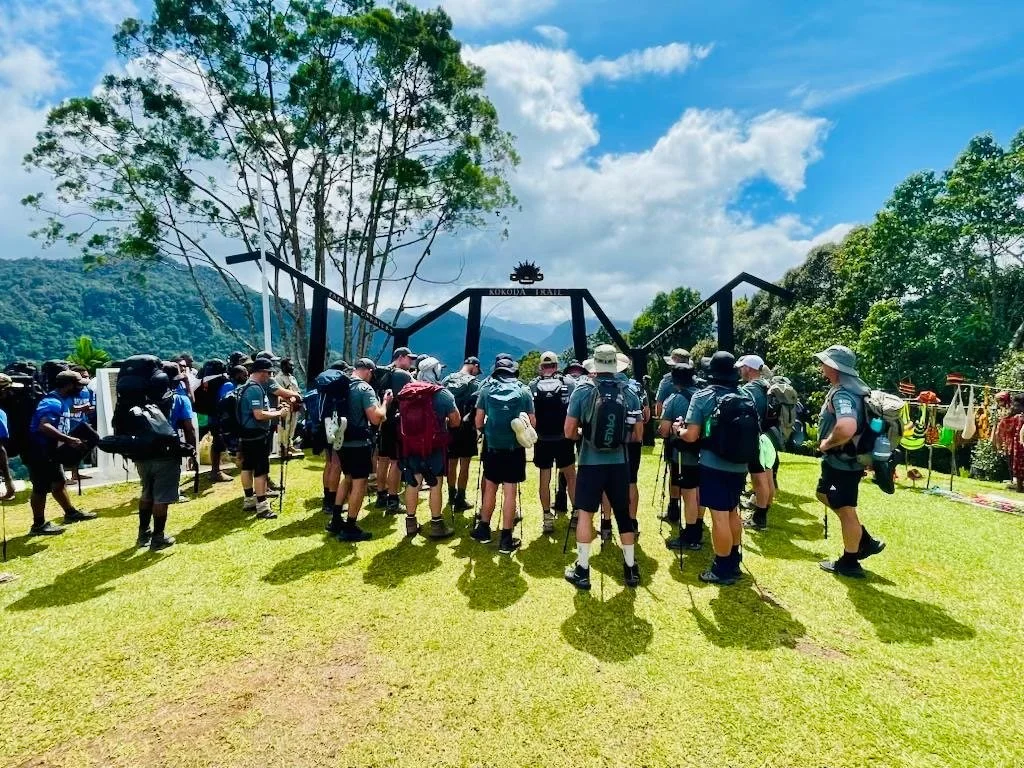
In October, a group of 24 men completed the Kokoda Trek Back to Back in Papua New Guinea, trekking through mud, rain, heat and humidity to beat brain cancer.
James Adams, a participant of the Kokoda Trek Back to Back, said he was inspired by Mark Hughes and the many people fighting brain cancer.
“There's a lot of kids and people out there suffering from brain cancer, we always had this in the back of our minds, a lot of people giving us inspiration that weren't able to be on the trek,” Adams said.
“That was the reason that we were all there, to raise funds for research, to try and find a cure for this nasty disease.
“That was always in the back of our heads to give us that mental strength, knowing that there are a lot of people out there worse than us, and we're doing it for them.”
A non-profit, health promotion charity, the Mark Hughes Foundation (MHF) reported that brain cancer is the leading cause of cancer death in children and adults aged under 40 in Australia.
The sponsorship and donations from the Kokoda Trek Back to Back raised almost $600 000 to support the MHF Centre for Brain Cancer Research at the University of Newcastle.
The MHF said these funds will help launch a ground-breaking new clinical trial testing how effectively a simple blood test can track tumour progression compared to the current gold-standard MRI.
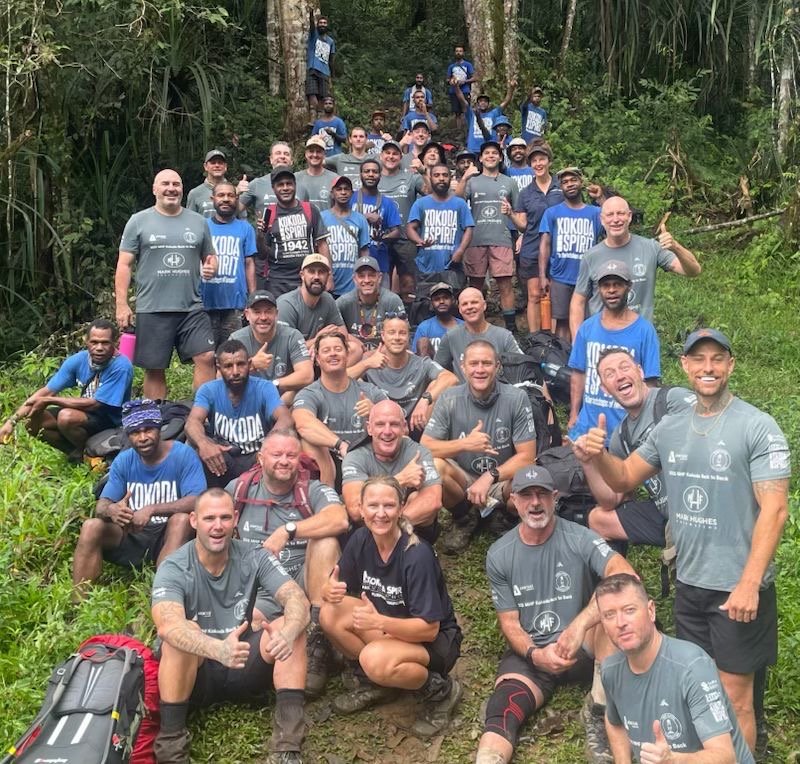
While most trekkers complete the Kokoda Trek only one way, this group chose to tackle it both there and back, strengthening their sense of community, building trust and supporting one another.
“We had a lot of encouragement from each other,” Adams said.
“If someone was looking a little bit down, there'd always be someone behind you egging you on to take that next step and push that a little bit harder.
“There was probably 10 of us boys from my area in Maroubra that all went together, so I already had that connection with those boys, but those connections obviously strengthened.
“The fellas, I didn't know, we all made a conscious effort to get around, we had plenty of time to have a chat to each other while we're walking so we got a sense of who they were and went through some tough times together on the track.
“I think you get to know someone a lot faster and a lot better when you're in a tough situation.
“We got really close in a really short period of time, and we'll be friends forever.”
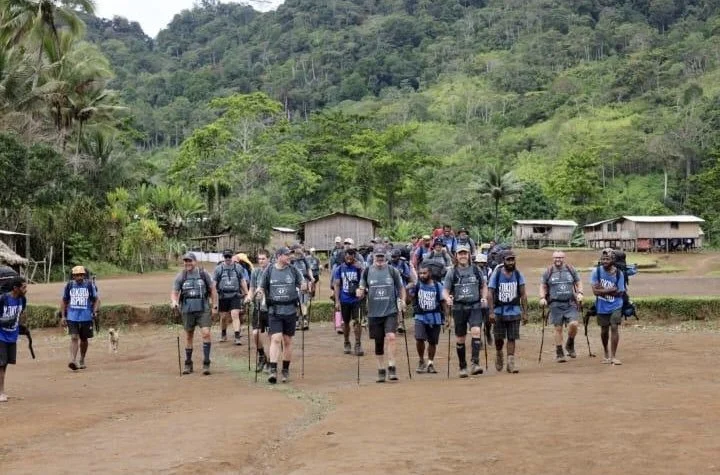
In World War II, 625 Australians were killed along the Kokoda Trail.
The Kokoda trek in Papua New Guinea is most recognised as the location of the World War II seven-month campaign between Japanese and Australian forces in 1942.
This battle prevented the Japanese from advancing across the Pacific and towards Australia.
One of the sponsors and participants of the Kokoda Trek, Mark Fisher, said that until you visit the Kokoda grounds, you cannot begin to imagine what our Australian soldiers experienced.
“Even when on the trek, the jungle is so thick, the terrain is so hard, the humidity, the rain, the hand-to-hand combat,” Fisher said.
“It was very humbling to actually see how these young men died and fought, it was an unimaginable human tragedy.
“Port Moresby's got a cemetery for all the Aussies, which they take care of.
“When you're walking around the cemetery, all these young men were between, I’d say, 70 per cent between the ages of 18 and 24. They were just babies, they had their whole lives in front of them”
“That's what stood out to me, that these men's lives were just taken, and how they were feeling, on this track.”
According to the Australian War Memorial, approximately 625 Australians were killed along the Kokoda Trail and over 1,600 were wounded. Casualties due to sickness exceeded 4,000.

Adams said he was surprised by how extreme the physical demands of the Kokoda Trek were and the conditions the Australian veterans fought in.
“The experience was unbelievable,” he said.
“The physical demands and mental strength we had to have to get through it, going there and back in the 12 days was quite challenging.
“You can't take your focus off where you're going to put your next step at all, or you'll end up falling over or doing some damage physically.
“We were drawing on each other for support, and also the fact that we weren't getting shot at.
“The diggers back in the day had to do it while they were getting shot at and carrying weapons and starved, there was all that sort of stuff in the back of our minds that gave us a little bit of an extra push to get through it, knowing that they did it back in the day.”

Fisher said there was a moment before he left for this trip that really stood out to him and has helped him develop a ‘new empathy’ and sense of gratitude.
“Just before I left, my wife came out and gave me a big three or four-second hug,” he said.
“I didn't think anything of it, not one thing. Then I started walking, and I just thought these poor young men who went away and they gave their mum or their dad or girlfriend or wife a big hug, but they had the thought that they might not do that to a loved one again.
“That really shook me up to think that last hug with my wife could have been the last ever, that was pretty confronting to think that they went through that.
“They didn’t know how long they're going to stay there for, if they were ever going to come home.”

Adams said every night, the group of men would gather around for about half an hour to tell their life stories and deepen their friendships with one another.
“That was one of the best parts for me,” he said.
“Every night we got up and told our life stories about where we're from, family and what we had been through growing up, some of the guys had really heavy and inspiring stories.
“That was something to look forward to every night and that really opened everyone's guards up to being vulnerable with the group.
“There were plenty of tears some nights from listening to people's stories, everyone comes from different places and to let your guard down and be vulnerable in front of a group of men, it's not something that happens too often these days, men are pretty guarded.
“To have that vulnerability amongst the group and being able to open your hearts and tell your story about where you come from, then have the support of everyone in the group was really inspiring.”
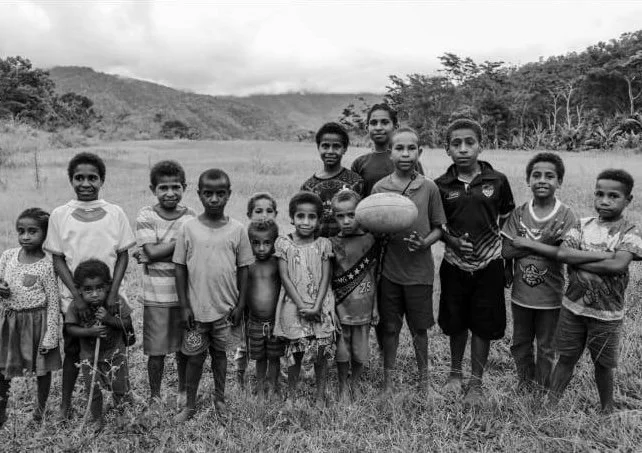
“The little kids had these big smiles on their faces.”
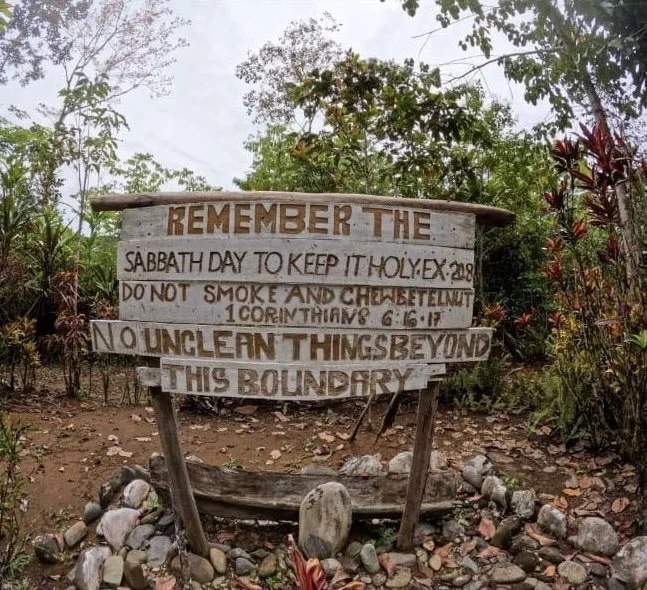
The porters on the Kokoda trek were direct descendants of the "Fuzzy Wuzzy Angels", the local villagers who assisted the Australian soldiers in the World War II battle. The trekkers connected with the local community by spending time in the villages and engaging with the children.
“They’re such a beautiful race of people,” Fisher said.
“The little kids had these big smiles on their faces, and their mothers would be selling us pineapples. They're just carefree, and just looking at those kids too, you think they're so happy.
“The porters were so good, that's their livelihood for them. They walk along with us, they protect us really, stop you from slipping, they grab your bag to make sure you don't fall and You get pretty close to your porter by the end of it the trek.”

Adams said this life-changing experience has increased his physical and mental wellbeing and recommends everyone visit the Kokoda Trek at least once in their lifetime.
“I pushed my body, probably as hard as it could be pushed during that time,” he said.
“Knowing that my body will do that, and being able to push myself in the gym harder through training and learning the mental strength, was another big one for me.
“Learning to open up, I've had a pretty good upbringing and stuff like that, but still, opening up, I found it beneficial. I think that was a good takeaway for me, to learn to let my guard down a bit more and be a bit more vulnerable and talk through what might be going on for me.
“I'll keep pushing on, keep training harder and know that I can go to those dark places and come out the other end.”
Support the Mark Hughes Foundation and their fight to cure brain cancer:
Donate, fundraise or shop at the Mark Hughes Foundation HERE
All donations of $2 or more are tax deductible